European Hydrogen Bank pilot auction results
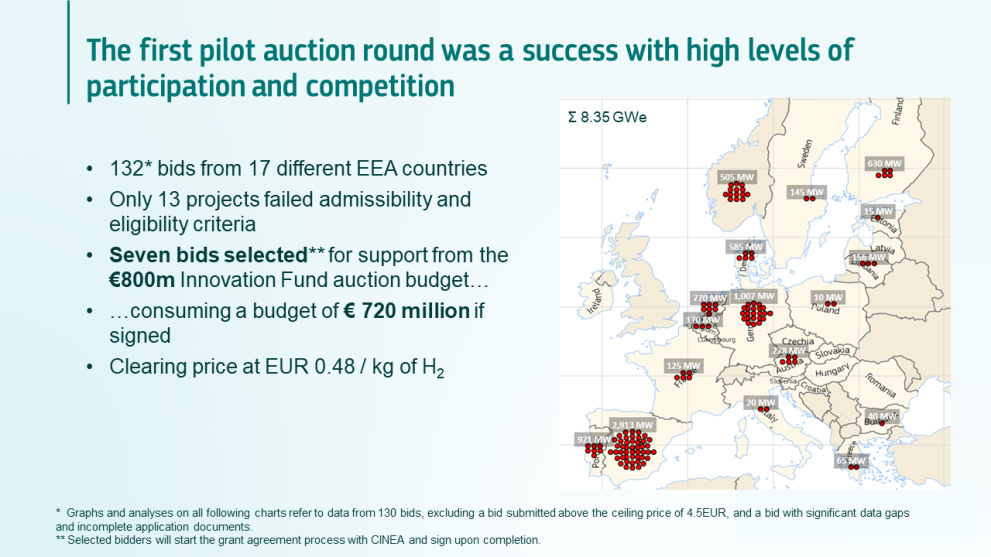
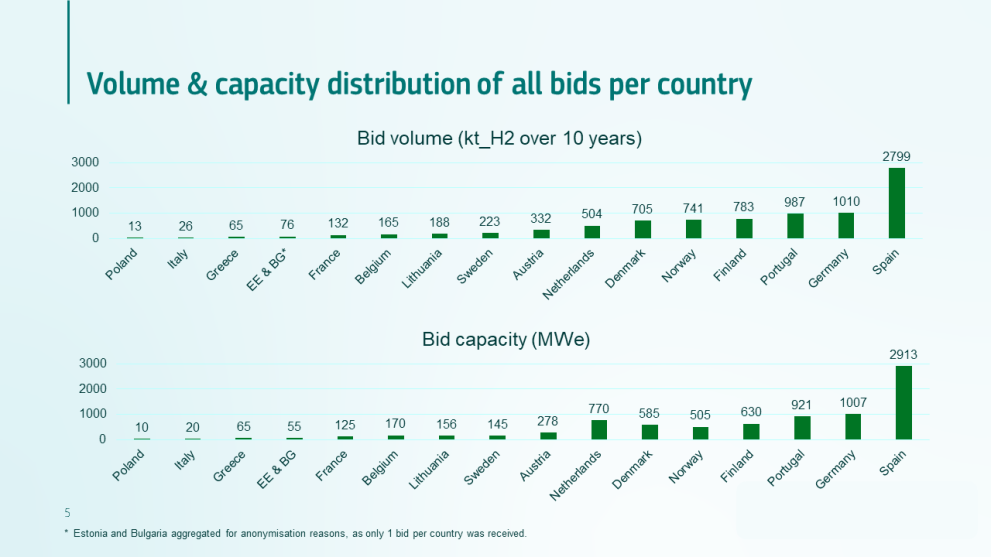
The first EU-wide auction (IF23 Auction) for the production of RFNBO (renewable fuel of non-biological origin) hydrogen was launched on 23 November 2023 and closed on 8 February 2024. The auction attracted 132 projects bids from 17 European countries.
You can find the recording of the most recent public webinar on the European Hydrogen Bank.
After evaluation, seven renewable hydrogen projects were selected and will receive nearly €720 million in project support from the Innovation Fund. Altogether, the selected projects will cover 1.5 Gigawatts electric (GWe) of electrolyser capacity, and produce a total volume of 1.58 million tonnes of RFNBO hydrogen over ten years.
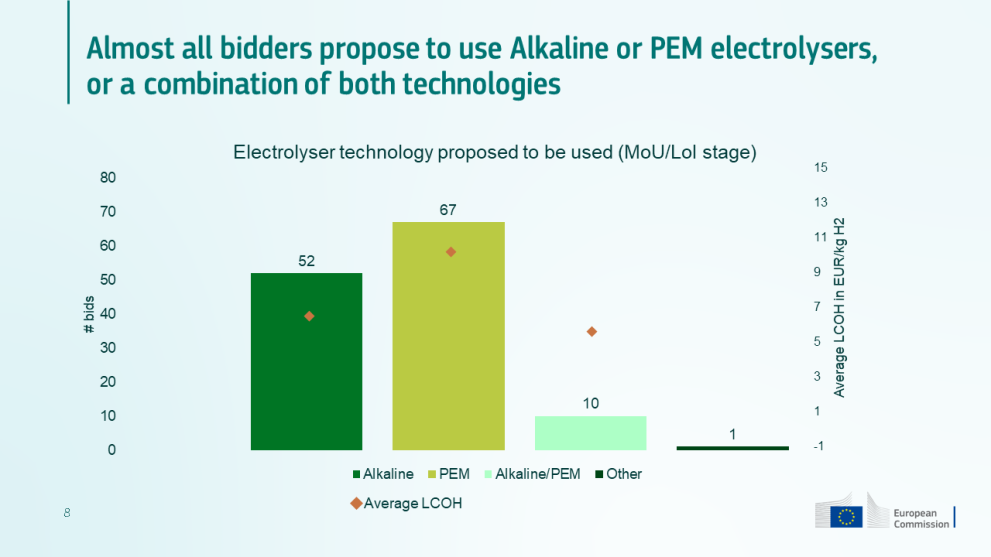
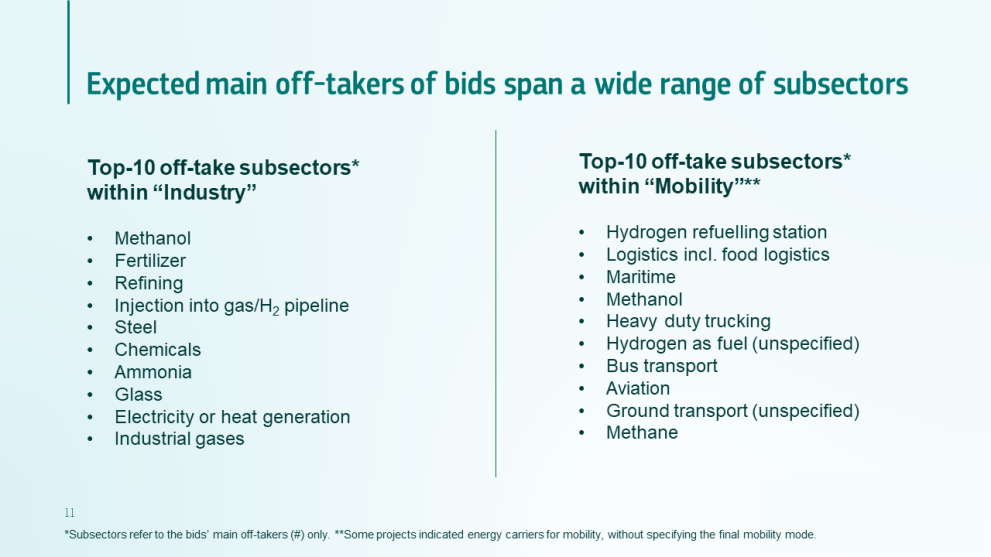
The renewable hydrogen produced by the selected projects will be used in sectors such as steel, chemicals, maritime transport, fertiliser production and more. Moreover, these projects will employ alkaline, proton exchange membrane (PEM) electrolysers, or a combination of both.
Out of 132 bids, 119 proposals were considered eligible and admissible. After being evaluated by the implementing body of the Innovation Fund, the European Climate, Infrastructure and Environment Executive Agency (CINEA), the projects were ranked from lowest to highest bid and awarded support in that order.
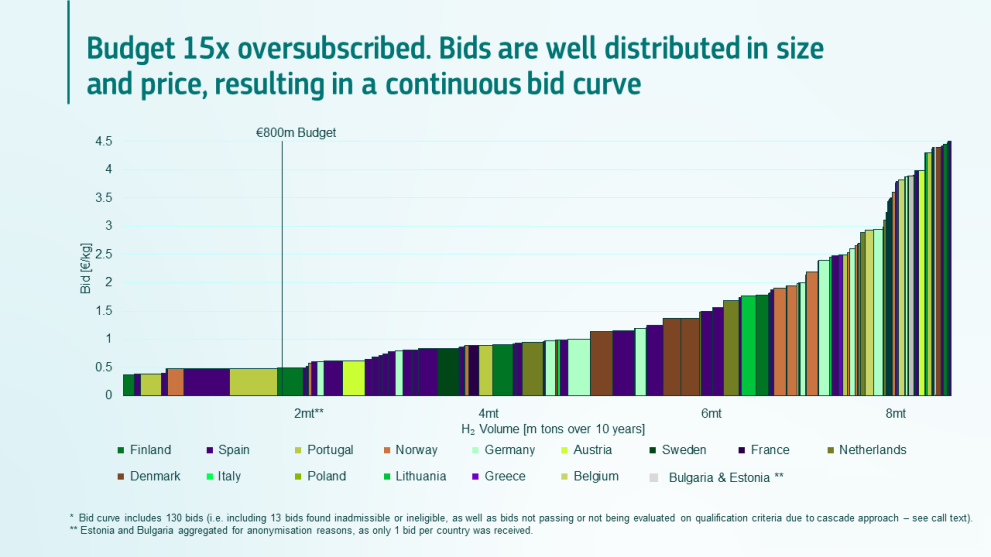
The submitted bids ranged from €0.37 to the ceiling price of €4.5 per kilogram of hydrogen produced.
The seven selected projects submitted bids between €0.37 and €0.48 per kilogram of RFNBO hydrogen produced and, based on the pay-as-bid design of the pilot auction, will receive an Innovation Fund grant ranging between €8 million and €245 million.
The following selected projects will produce renewable, electrolytic hydrogen:
| Project | Coordinator | Country | Bid volume (kt_H₂ / 10 yrs) |
Bid capacity (MWe - megawatts electricity) |
Expected GHG avoidance (kt_CO₂ / 10 yrs) |
Bid price (EUR/kg) |
|---|---|---|---|---|---|---|
| eNRG Lahti | Nordic Ren-Gas Oy | Finland | 122 | 90 | 836 | 0.37 |
| El Alamillo H₂ | Benbros Energy S.L. | Spain | 65 | 60 | 443 | 0.38 |
| Grey2Green-II | Petrogal S.A. | Portugal | 216 | 200 | 1477 | 0.39 |
| HYSENCIA | Angus | Spain | 17 | 35 | 115 | 0.48 |
| SKIGA | Skiga | Norway | 169 | 117 | 1159 | 0.48 |
| Catalina | Renato Ptx Holdco | Spain | 480 | 500 | 3284 | 0.48 |
| MP2X | Madoquapower 2x | Portugal | 511 | 500 | 3494 | 0.48 |
After signing the grant agreement, the selected projects will have to start producing renewable hydrogen within a five-year period. Furthermore, selected projects will only be awarded their fixed premium subsidy for up to 10 years upon certification and verification of renewable hydrogen production.
Individual grant agreements are expected to be signed by November 2024, at the latest.
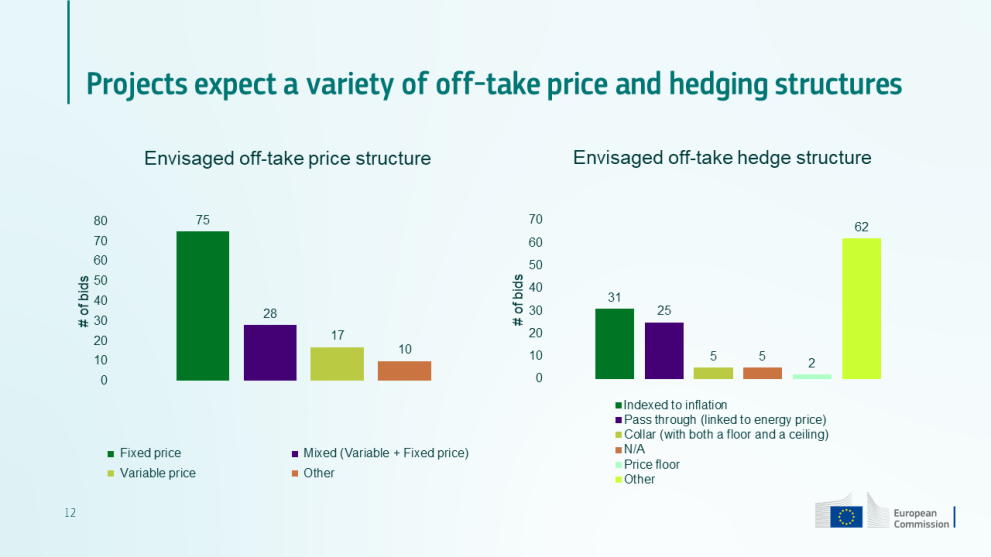
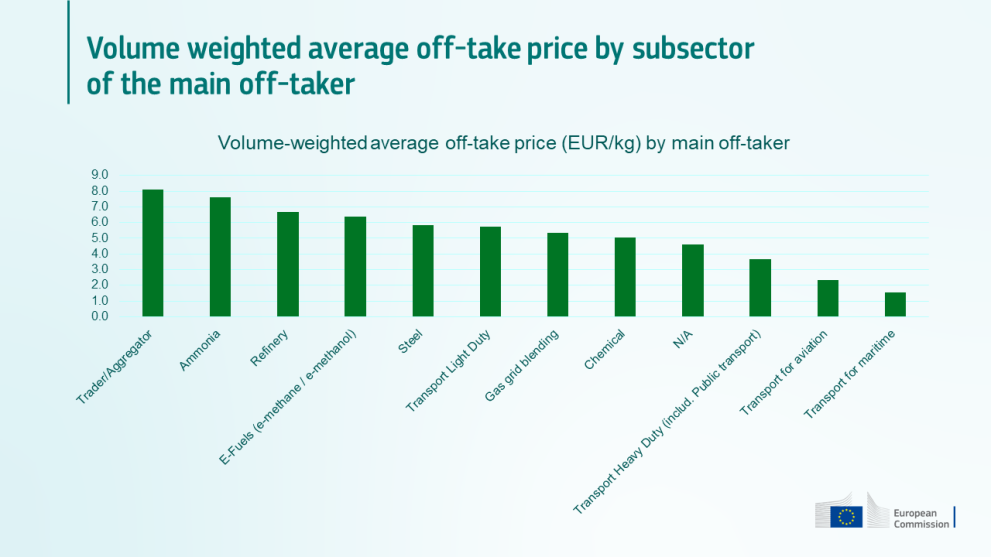
Check our slides below to learn more about the auction results beyond the selected projects.
EHB Pilot Auction Results 1EHB Pilot Auction Results 1 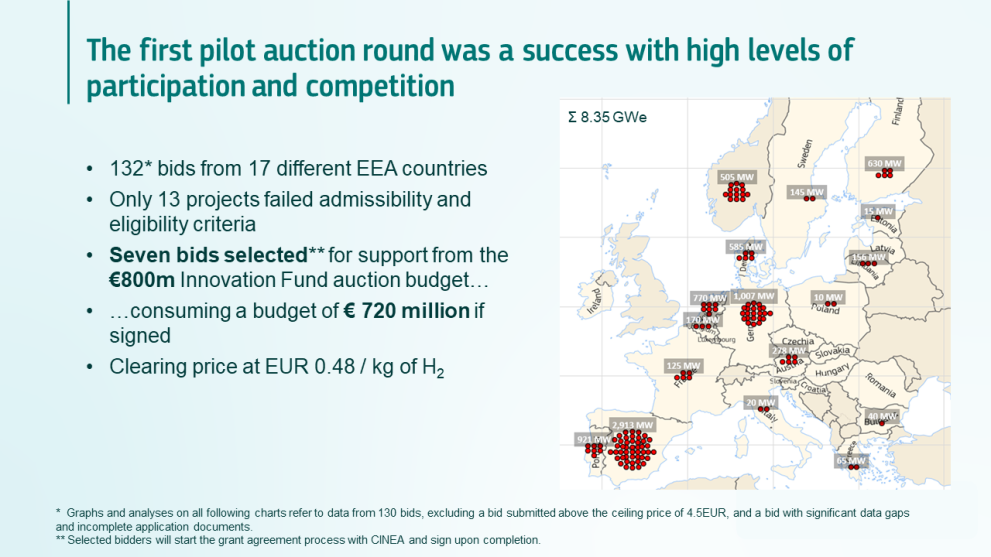
EHB Pilot Auction Results 2EHB Pilot Auction Results 2 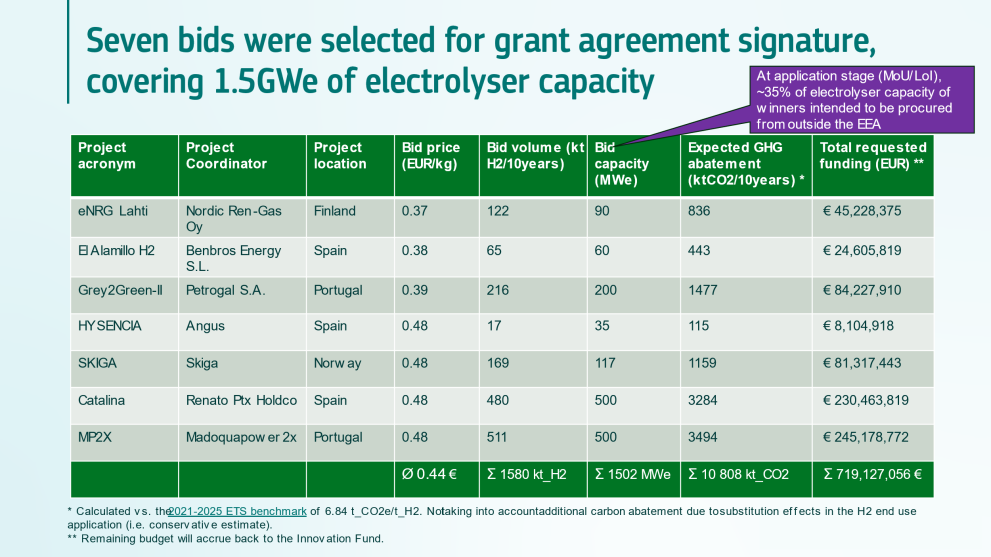
EHB Pilot Auction Results 3EHB Pilot Auction Results 3 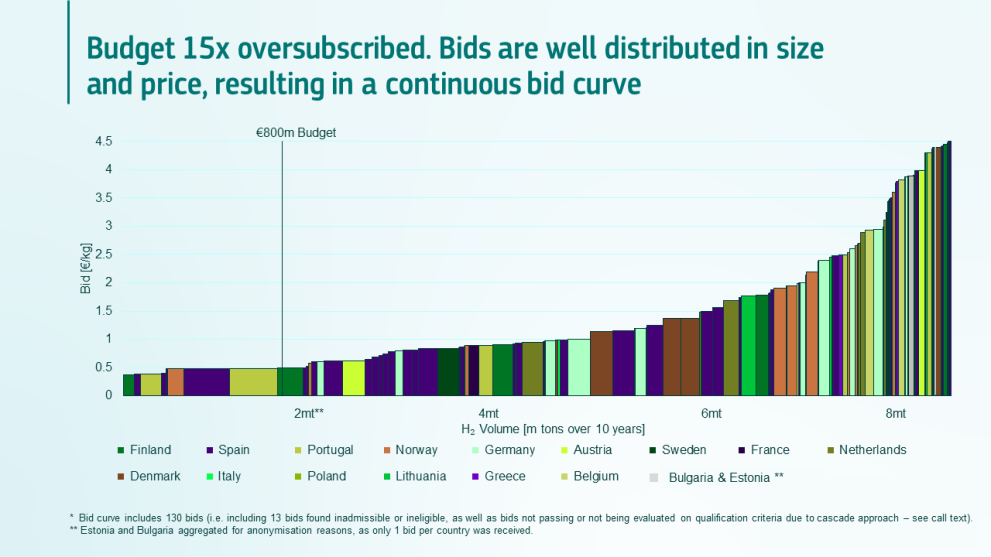
EHB Pilot Auction Results 4EHB Pilot Auction Results 4 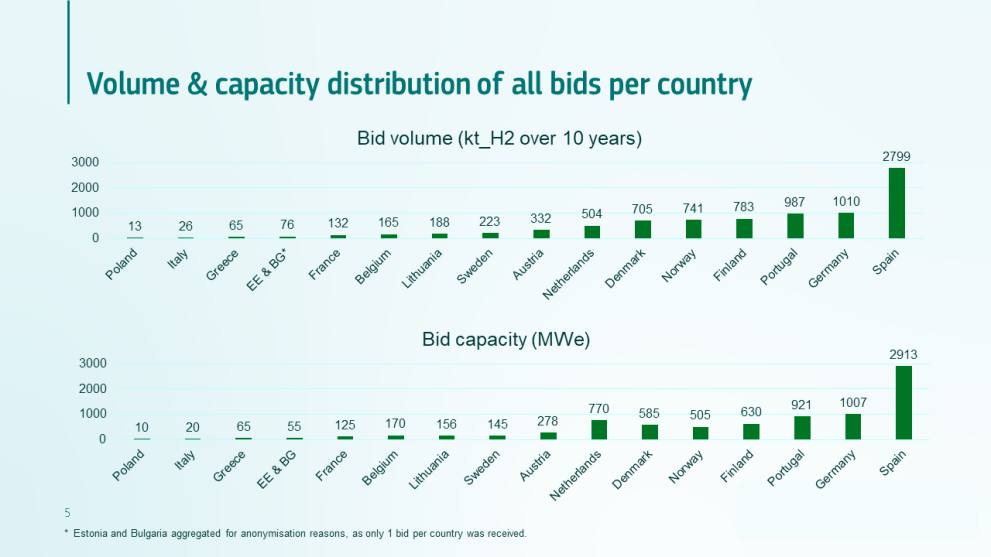
EHB Pilot Auction Results 5EHB Pilot Auction Results 5 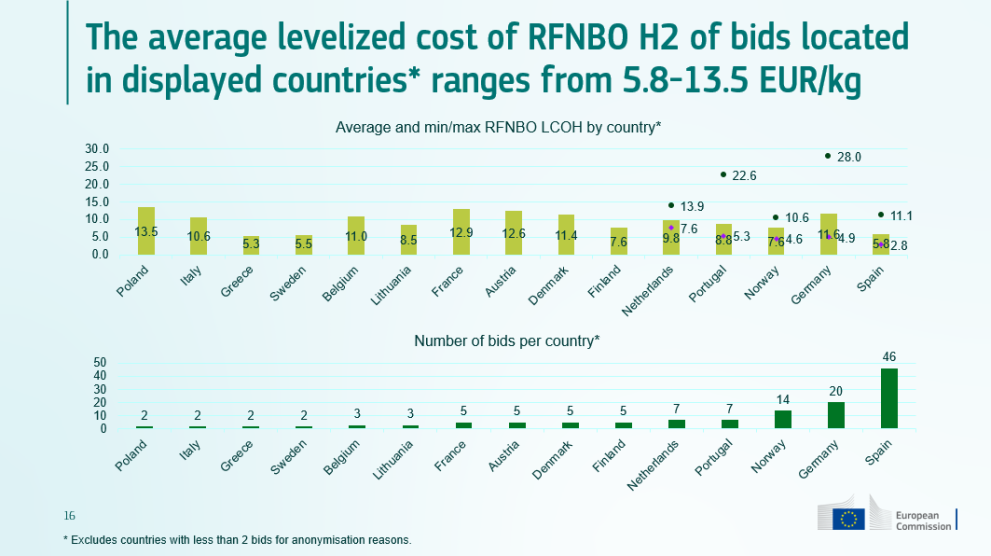
EHB Pilot Auction Results 6EHB Pilot Auction Results 6 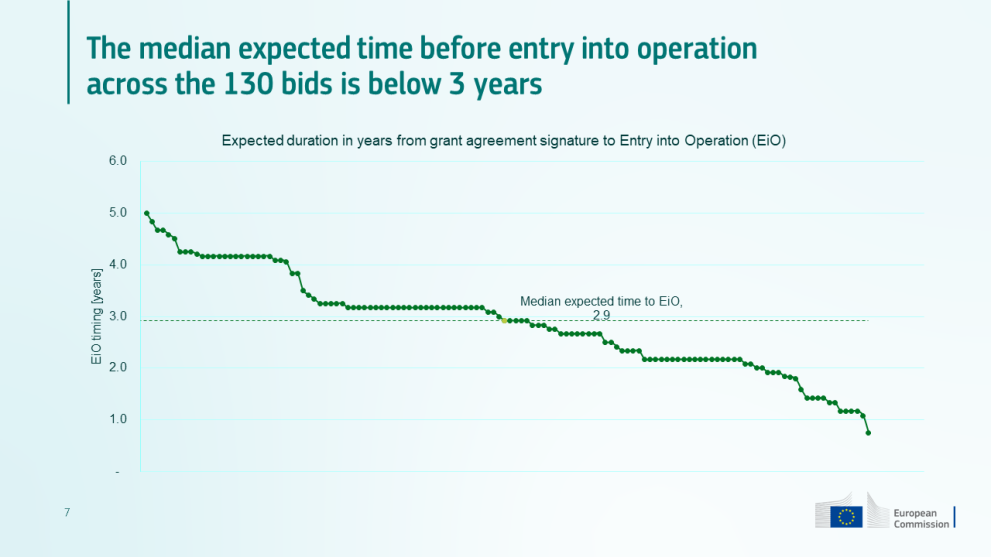
EHB Pilot Auction Results 7EHB Pilot Auction Results 7 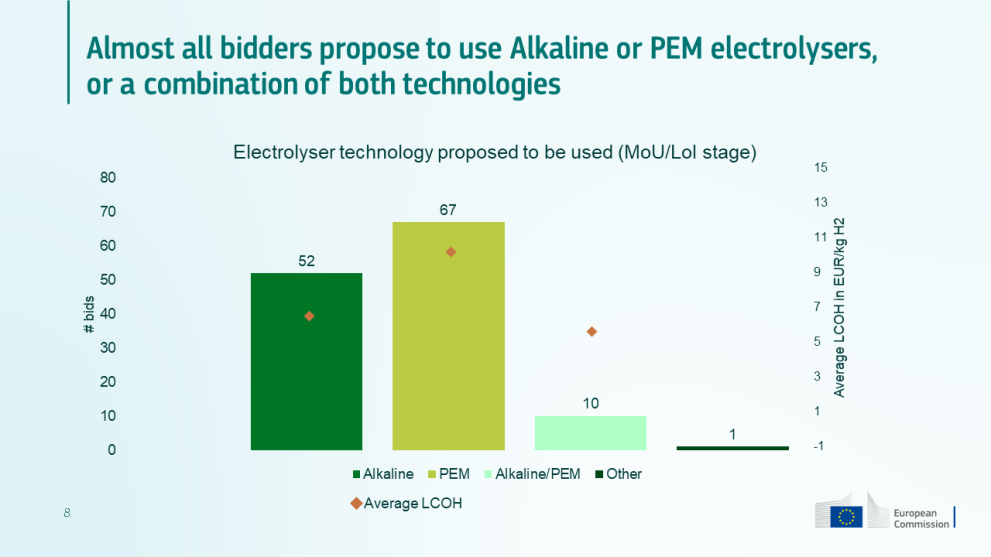
EHB Pilot Auction Results 8EHB Pilot Auction Results 8 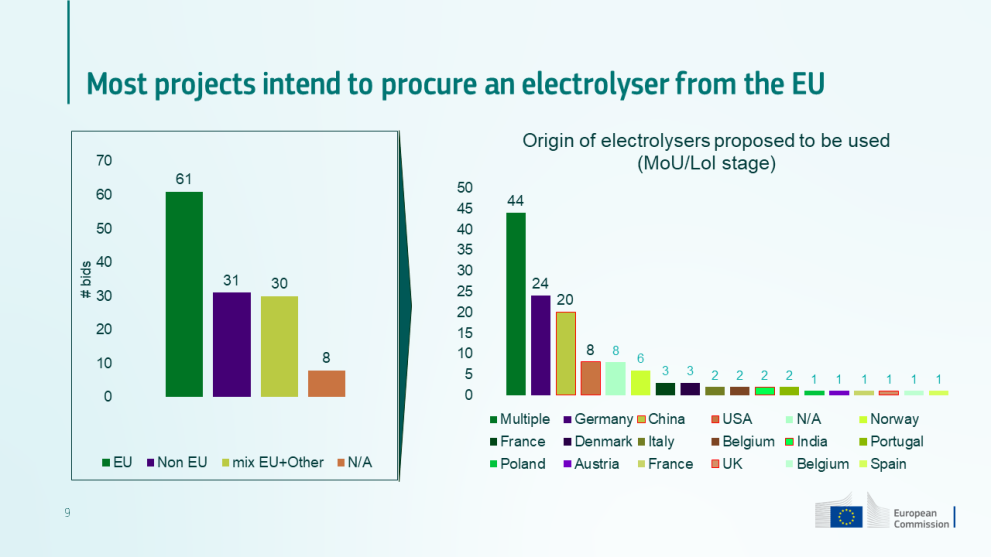
EHB Pilot Auction Results 9EHB Pilot Auction Results 9 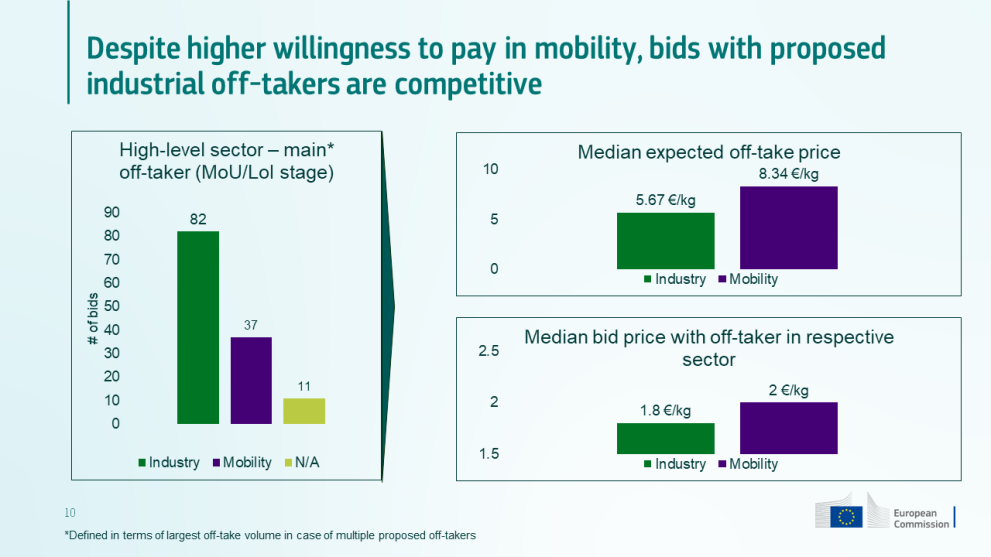
EHB Pilot Auction Results 10EHB Pilot Auction Results 10 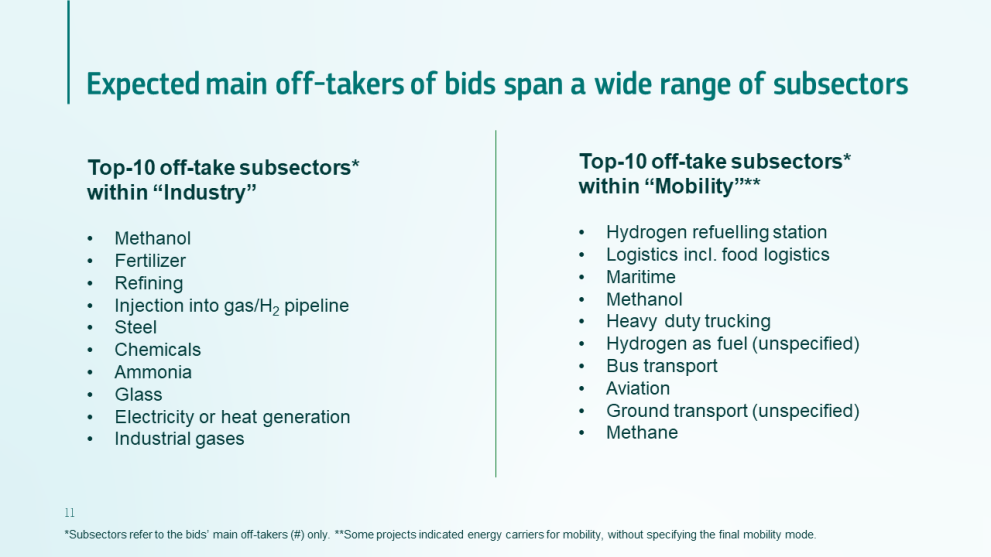
EHB Pilot Auction Results 11EHB Pilot Auction Results 11 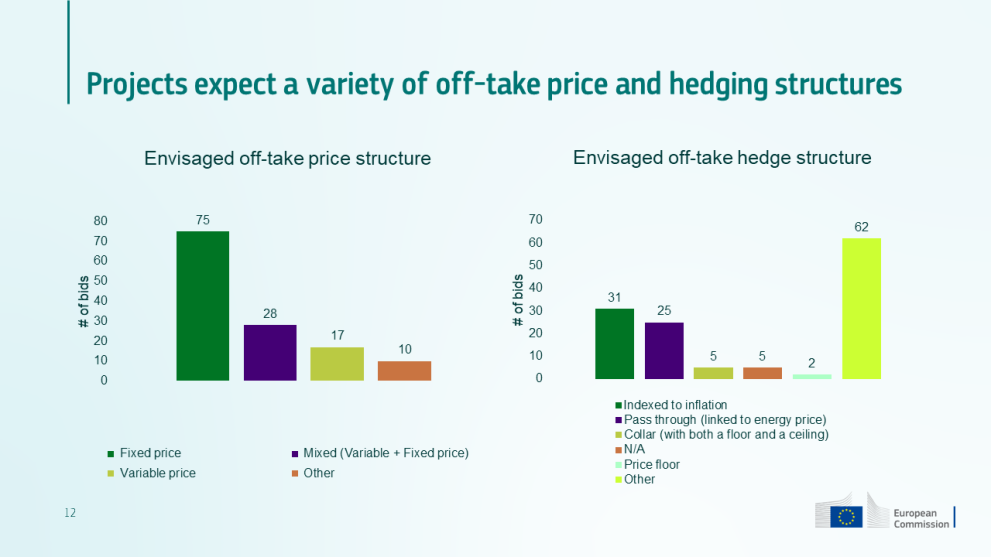
EHB Pilot Auction Results 12EHB Pilot Auction Results 12 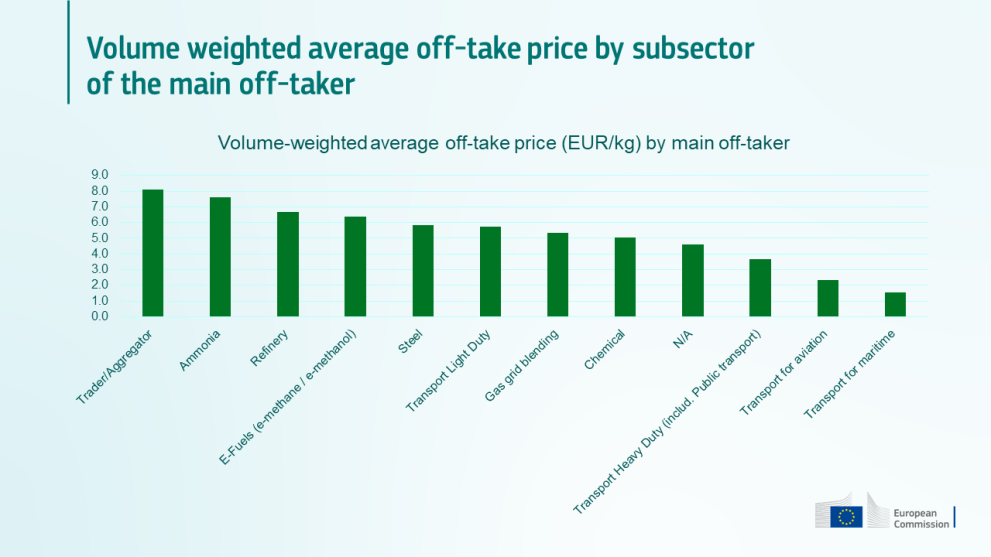
EHB Pilot Auction Results 13EHB Pilot Auction Results 13 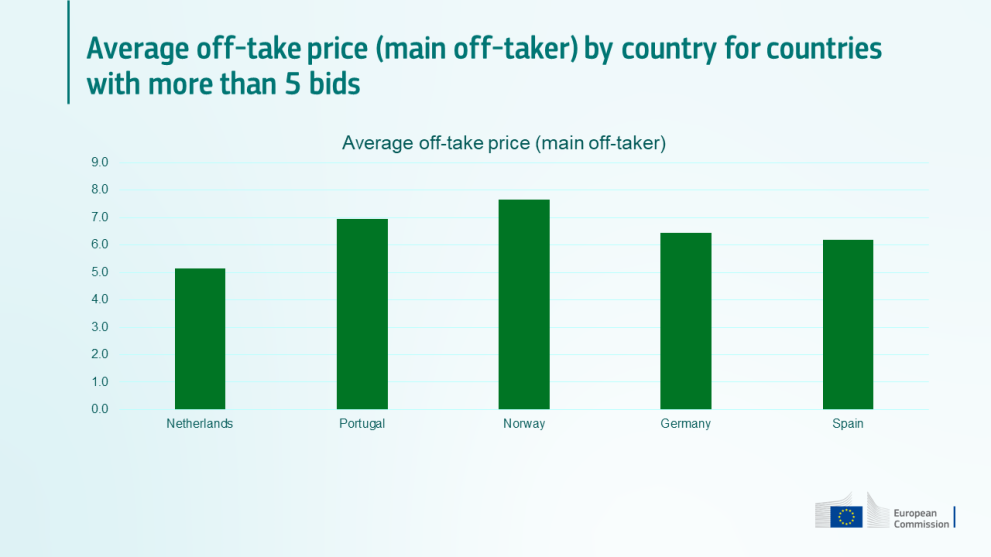
EHB Pilot Auction Results 14EHB Pilot Auction Results 14



By helping Europe decarbonise its industry and transition away from fossil fuels, hydrogen will play a crucial role in achieving the EU’s climate neutrality goals. In relation to this, the IF23 Auction for renewable hydrogen is a key element of the European Hydrogen Bank (EHB), which establishes a financing and coordination platform to secure cost-efficient and renewable hydrogen throughout the EU.
To learn more about the European Hydrogen Bank, watch the recording of our most recent public webinar on the topic.
For further information on the results of the IF23 Auction, please consult our dedicated FAQs.
An auction is a process in which goods or services are offered for bidding. In the case of a subsidy scheme, what is auctioned is not the product itself, but rather a subsidy for a specific activity or product. Typically, bidders requiring the lowest public subsidy for an auctioned activity or product will win the subsidy.
With today’s results, the Innovation Fund has begun the process of allocating funds through a fixed-premium pilot auction for the production of renewable hydrogen (“RFNBO Hydrogen” or “Renewable Fuel of Non-Biological Origin Hydrogen”). During the auction, project developers were able to participate and submit a fixed-premium bid (payment in €/kg of produced RFNBO hydrogen) to receive support for their production.
On 23 November 2023, the Commission launched the first auction under the European Hydrogen Bank to support the production of RFNBO hydrogen. RFNBO hydrogen producers located in any of EEA country can be supported by the auction. The full auction design can be found in the call text of the pilot auction here.
Auctions allow for funding to be allocated to technologies in an economically efficient way, allow projects to move from first-or second-of-a-kind demonstration projects to broader commercial roll-out. The auction therefore contributes to the objectives of the revised ETS Directive 2003/874 to support the scaling up of innovative technologies. The revised ETS Directive enables the use of competitive bidding to award support from the Innovation Fund and to cover up to 100% of relevant costs (as opposed to 60% under the regular Innovation Fund grants).
The key advantages of using an auction as a financing instrument for technologies like renewable hydrogen production that are moving towards market roll-out are:
- It provides cost-efficient support allocated through a market-based instrument.
- The technology- and project development risks are carried by the project promoter, who is best placed to address them, through payments based only on delivered volumes of the supported good, i.e. there are no payments before a project’s entry into operation.
- Auctions allow for price discovery and market formation in the EU: competitive auctions with a simple and transparent set-up reveal private costs and create valuable and comparable price points that can help to kick-start a European hydrogen market.
- Auctions have a lower administrative burden for applicants than other grant processes. Less documentation is required, and the evaluation timeline is shorter.
Auctions-as-a-Service is a way for EEA Member States to use the Innovation Fund hydrogen auction to allocate additional, national funds to projects that could not be awarded under the Innovation Fund budget. It is an offer from the Commission to Member States to make use of the auction scheme that was designed to be compatible with the Climate, Energy and Environmental Aid Guidelines (CEEAG) and to streamline the process of notifying State aid with the help of Commission templates.
Auctions-as-a-Service can play a significant role in the nascent hydrogen market. For new markets, it is crucial to prevent market fragmentation with different national support schemes and the resulting divergent price signals. Project developers, too, would benefit from a single set of rules for winning a subsidy across Europe rather than having to apply to various funding schemes with different application procedures and timelines. The service can also save the administrative costs of developing several support schemes in different Member States and bring such subsidies to the market earlier when they are most needed.
Germany was the first Member State to participate in Auctions-as-a-Service by making € 350 million available from its national budget, in addition to the € 800 million Innovation Fund budget.
The next auction will be launched towards the end 2024, incorporating lessons learned from the pilot auction through a thorough stakeholder consultation process. The Commission has made revised draft Terms & Conditions for the second auction round available on its website, for written stakeholder consultation culminating in a workshop in mid-June 2024. Data and analyses from this first pilot round will serve as a basis for informed discussion.
The legal basis for the Innovation Fund was established in 2019 and the first call for proposals was launched in 2020. So far, more than 100 projects have signed grant agreements worth € 6.5 billion from 3 large-scale (LSC) and 3 small-scale calls (SSC) for proposals. A 2023 combined call including small, medium, and large scale as well as pilot project and manufacturing of component topics is ongoing.
Innovation Fund projects under the regular grants have up to 4 years to reach financial close, which is followed by the construction period before entry into operation.
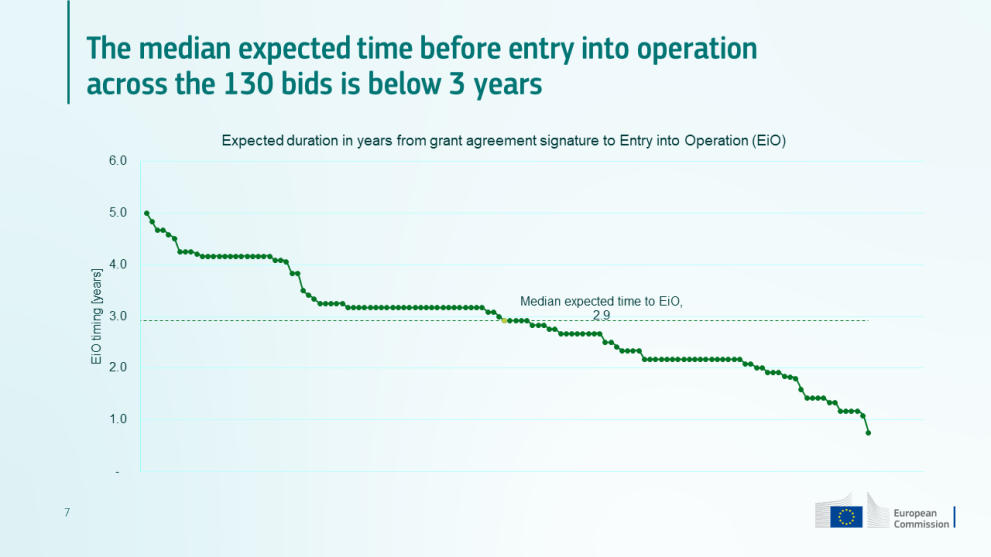
Projects selected in the auction will have a maximum of 5 years to reach entry into operation. The median indicated time to entry into operation across all bids was however much lower, at 2.9 years. Support from the IF is provided for a maximum period of 10 years after entry into operation.
The Innovation Fund is allocated on the basis of excellence and through competitive calls for proposals (auctions or regular grants) following the application of award criteria as described in the Delegated Regulation, Financing Decision and respective call texts. The projects that score the highest in the evaluation process within the available topic budget are selected, regardless of their sector or location.
The legal basis of the Innovation Fund provides for the possibility to use a specific award criterion to ensure geographical balance. However, Innovation Fund funded projects are now located in 24 Member States and it is not deemed necessary at this stage to resort to a specific award criterion considering that the overall balance is improving with each call, notably with the most recent 3 LSC and 3 SSC results.
Currently, there are two major initiatives to support Member States under the Innovation Fund with the development of a national pipeline of high quality innovative projects and thus improve the geographical balance:
- The latest revision of the ETS Directive introduced ‘Technical Assistance for Member States with low effective participation’ – aiming to increase the overall quality of Innovation Fund applications from countries with lower participation levels.
- Training sessions to all Member States National Contact Points or Innovation Fund Expert Group representatives on award criteria, outreach and communication, etc. The training will start in Q2 2024 and will be complemented by support on outreach and communication at national level.
This pilot auction was launched under the umbrella of the European Hydrogen Bank. The objective of the EU Hydrogen Bank is to close the investment gap and connect future supply of renewable hydrogen with our goal of 20 million tonnes of renewable hydrogen deployed in Europe by 2030. It will facilitate both renewable hydrogen production within the EU and imports, contributing to the REPowerEU objectives and to the transition to climate neutrality. It further supports the objectives of the Green Deal Industrial Plan and the Net Zero Industry Act. The scaling up of electrolyser manufacturing for renewable hydrogen production will contribute to the competitiveness and resilience of European industry, including steel and fertiliser production and the shipping industry. Scaling up the European hydrogen market will also allow European companies to play a leading role in the emerging global hydrogen market, which offers new growth opportunities and quality job creation. The Hydrogen Bank Communication accompanied the legislative proposal for the Net-Zero Industrial Act.
Overview
The Innovation Fund is one of the world’s largest funding programmes for the deployment and commercialisation of low-carbon and innovative technologies. Currently, the Innovation Fund awards support for projects in the form of regular grants for proposals, auctions, project development assistance and financial instruments such as Invest EU.
In addition to the existing grants programme, the European Commission has developed a new support mechanism of competitive bidding (‘auctions’). Auctions expand the portfolio of support mechanisms available under the Innovation Fund, fostering faster and more cost-efficient support for the roll-out of low-carbon technologies needed for the green transition.
Auctions are market-based instruments through which the Commission can allocate Innovation Fund support to accelerate innovative, low-carbon projects in the EU.
An auction is a process in which goods or services are offered for bidding. In the case of a subsidy scheme, what is auctioned is a subsidy for a specific activity or product. Typically, bidders requiring the lowest public subsidy for a decarbonisation activity or product will win the subsidy.
The Innovation Fund has begun to allocate funds through a fixed-premium pilot auction directed at the production of Renewable Fuels of Non-Biological Origin (RFNBO) hydrogen. During the auction, project developers could participate and submit a fixed-premium bid (€/kg of produced renewable hydrogen) to receive support on their production.
After some basic eligibility and quality checks, bids are ranked from lowest to highest and awarded support, in that order, until the auction budget is exhausted. The fixed-premium support is paid for up to ten years.
The Innovation Fund only auctions a limited budget per auction to incentivise competition (€800 million in the case of the first auction).
Following the revised European Union Emissions Trading System (EU ETS) Directive, the Innovation Fund can support projects through different types of competitive bidding mechanisms, specifically:
- fixed-premium contracts
- Contracts for Difference (CfDs) or
- Carbon Contracts for Difference (CCfDs).
This support must enable decarbonisation technologies for which the European carbon price and regulatory framework might not be a sufficient incentive.
In the pilot auction, the Innovation Fund offers a fixed premium to support renewable hydrogen production.
Many EU Member States have introduced auctions to allocate funds to support renewable power projects, which have helped to lower the price of renewable energy and favoured the uptake of more efficient and climate-friendly technologies like wind and solar. By definition, a well-designed auction mechanism allows an efficient allocation of support - at a competitively determined level. This minimises the costs to the public and, if designed well, de-risks projects sufficiently so that they attract more private capital.
Compared to regular grants, auctions will provide payments based only on certified and verified production (i.e. no pre-financing or payments before entry into operation) and tackle projects with a different risk profile than those addressed by the current Innovation Fund regular grants programmes. They are well suited for projects that have moved closer to commercial deployment, with lower technology and construction risks, but still face profitability issues. Auctions also ensure that no public money is spent on covering project development risks best handled by the private sector.
Another advantage is that auctions create competition between producers, which may lead to lower consumer prices. In addition, competitive bidding can reduce the risk of providing more public support than necessary, thereby ensuring taxpayers’ best value for money. Competitive bidding is considered to be proportionate support under the Guidelines on State aid for climate, environmental protection and energy (CEEAG). It has been a significant success story in the renewable power sector in many EU Member States, considerably bringing down the funding needs for renewable power.
Competitive bidding can also be used as a tool for price discovery for goods with unknown market prices. Currently, there is no existing liquid market for renewable hydrogen and its derivatives. The Innovation Fund will publish key price points to help foster the renewable hydrogen market.
As part of the ‘Fit for 55’ package, the Commission proposed to set up a competitive bidding instrument in the proposal to revise the EU ETS directive, along with several other proposals to make the EU’s climate, energy, land use, transport and taxation policies fit for reducing net GHG emissions by at least 55% by 2030, compared to 1990 levels.
Competitive bidding was also highlighted as a support mechanism for hydrogen production and uptake in the REPowerEU Plan, specifically as a central measure to reduce fossil-fuel consumption in hard-to-decarbonise industrial sectors and diversify energy imports away from Russian fossil fuels.
Further, the revised EU ETS Directive introduced competitive bidding procedures as a new possible mechanism for allocating support provided by the Innovation Fund.
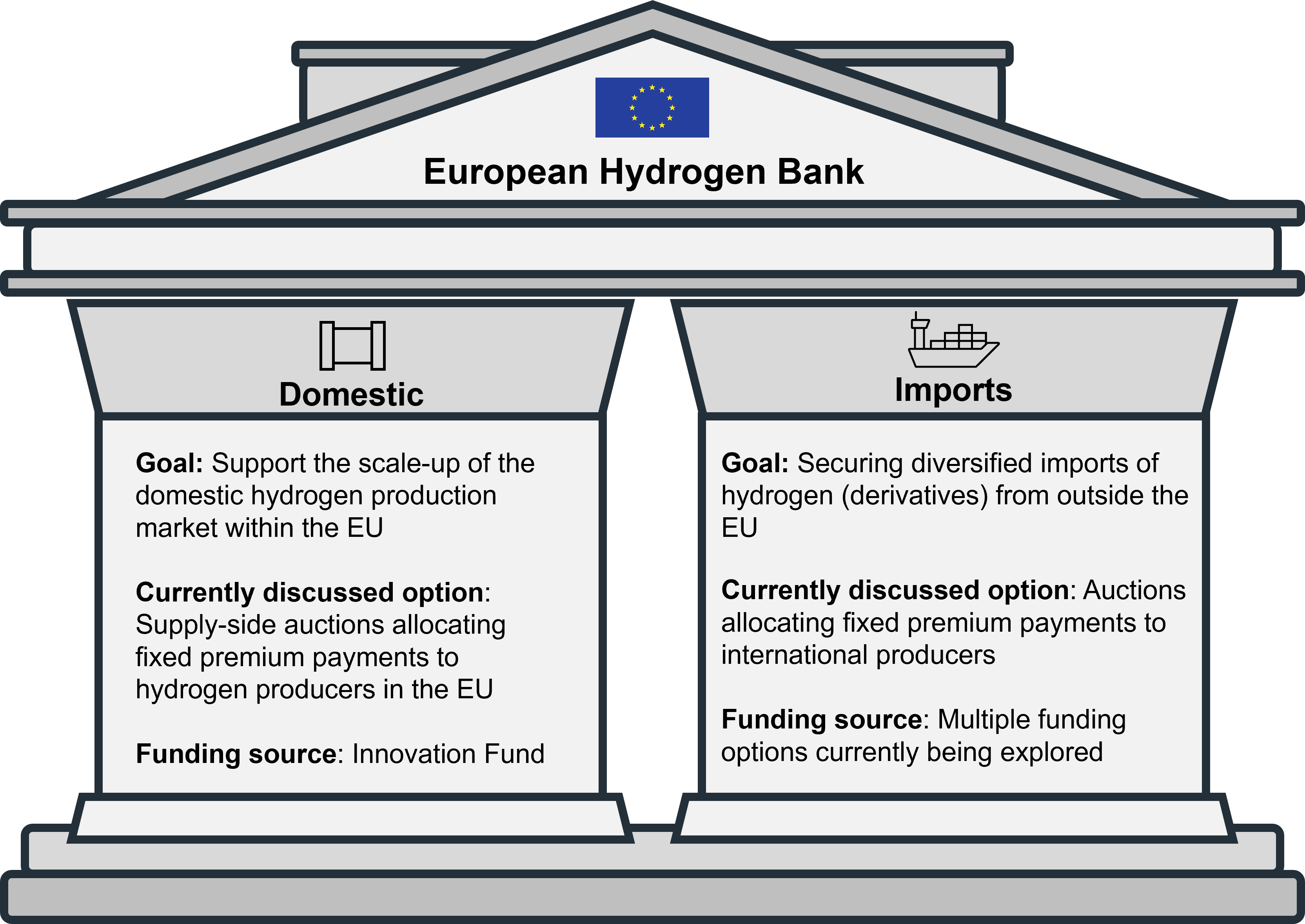
The Innovation Fund pilot auction for hydrogen production is a key element of the European Hydrogen Bank (EHB), which establishes EU financing instruments and a coordination platform to cost-effectively secure domestic and international renewable hydrogen volumes in the EU.
Auctions operationalise the domestic pillar of the EHB, as detailed in the figure below:
Why hydrogen? The goal of the Innovation Fund is to support the demonstration and commercialisation of innovative low-carbon technologies and processes. While many decarbonisation technologies are already mature, climate-neutral options are not yet available or scalable for hard-to-decarbonise sectors of the EU economy, such as heavy-duty transport and energy-intensive industrial processes. Hydrogen produced using renewable electricity, ‘RFNBO hydrogen’, is a climate-neutral option for these sectors and fully aligned with the REPowerEU Plan political priorities. The Commission has defined RFNBO hydrogen by adopting two Delegated Acts as required under the Renewable Energy Directive. The first Delegated Act defines under which conditions hydrogen, hydrogen-based fuels or other energy carriers can be considered RFNBOs. The second Delegated Act provides a methodology for calculating life-cycle GHG emissions for RFNBOs. Compliance with the two Acts is also necessary for hydrogen production to be counted towards Member States’ renewable energy targets.
2024 Auction for renewable hydrogen production – Draft Terms and Conditions (T&Cs)
The first auction under the Innovation Fund (IF23 Auction), which supports producers of hydrogen categorised as Renewable Fuel of Non-Biological Origin (RFNBO) with a budget of €800 million, closed on 8 February 2024. The call attracted 132 proposals from 17 European countries. The results of the IF23 Auction are highlighted in our press release on the topic.
Following the success of the first auction, the Innovation Fund will be launching a second auction before the end of 2024. As part of a “lessons learned” exercise, draft Terms & Conditions (T&Cs) for the IF24 Auction were published with the purpose of gathering structured feedback from the main stakeholders involved.
On 12 June 2024, the Directorate General for Climate Action (DG CLIMA) held a stakeholder consultation to discuss the draft T&C’s for the IF24 Auction. This was based on key learnings from the IF23 Auction and the stakeholder feedback gathered through a dedicated survey.
Please find all relevant material from this stakeholder consultation on our dedicated event page.
The draft Terms and Conditions for the 2024 Innovation Fund Auction for the production of renewable (RFNBO) hydrogen
The draft T&Cs incorporate improvements and clarifications based on key learnings from the IF23 Auction and feedback received from bidders through a dedicated survey. The following key design elements are proposed for revision:
- Reduction of the auction ceiling price from 4.5 to 3.5 EUR/kg.
- Reduction of the maximum “Entry into Operation” time from 5 to 3 years.
- Increase the requested amount of the completion guarantee, from 4% to 10% of the requested grant amount.
- Inclusion of a dedicated budget basket for projects with off-takers in the maritime sector, in accordance with the 2023 ETS Directive revision.
- Request of more detailed information, particularly on the electrolyser’s origin and value chain, as part of the electrolyser procurement strategy. This additional information would support decision-making related to the Net-Zero Industry Act (NZIA).
Through the 2024 Auction, the Innovation Fund will continue to support RFNBO hydrogen producers located in the EEA. This will be done in the form of a fixed premium payment released upon verified and certified production for a maximum period of 10 years.
The AaaS scheme will once again be offered to Member States as an option to allocate additional national funds to support projects. This service reduces the risk of market fragmentation by streamlining funding applications across the EEA and alleviating the administrative burden for Member states by allowing them to rely on an EU-wide auction mechanism to identify the most competitive projects.
2023 Auction for renewable hydrogen production
The first competitive bidding mechanism under the Innovation Fund was implemented through a pilot auction to support renewable hydrogen production. The pilot auction, which opened on 23 November 2023 and closed on 8 February 2024, received 132 bids from 17 European countries.
These were the objectives of the 2023 pilot auction:

An €800 million budget from the Innovation Fund was available for bidders (project developers). Funding will be awarded as a fixed premium in €/kg of verified and certified RFNBO hydrogen produced, on top of market revenues that developers can expect to achieve. Funding will be guaranteed for up to ten years of operation. Awarded projects have entered into a grant agreement with the European Climate, Infrastructure and Environment Executive Agency (CINEA), the implementing authority for the scheme.
Learn more about the 2023 pilot auction by consulting the related Terms and Conditions, which were published on 30 August 2023.
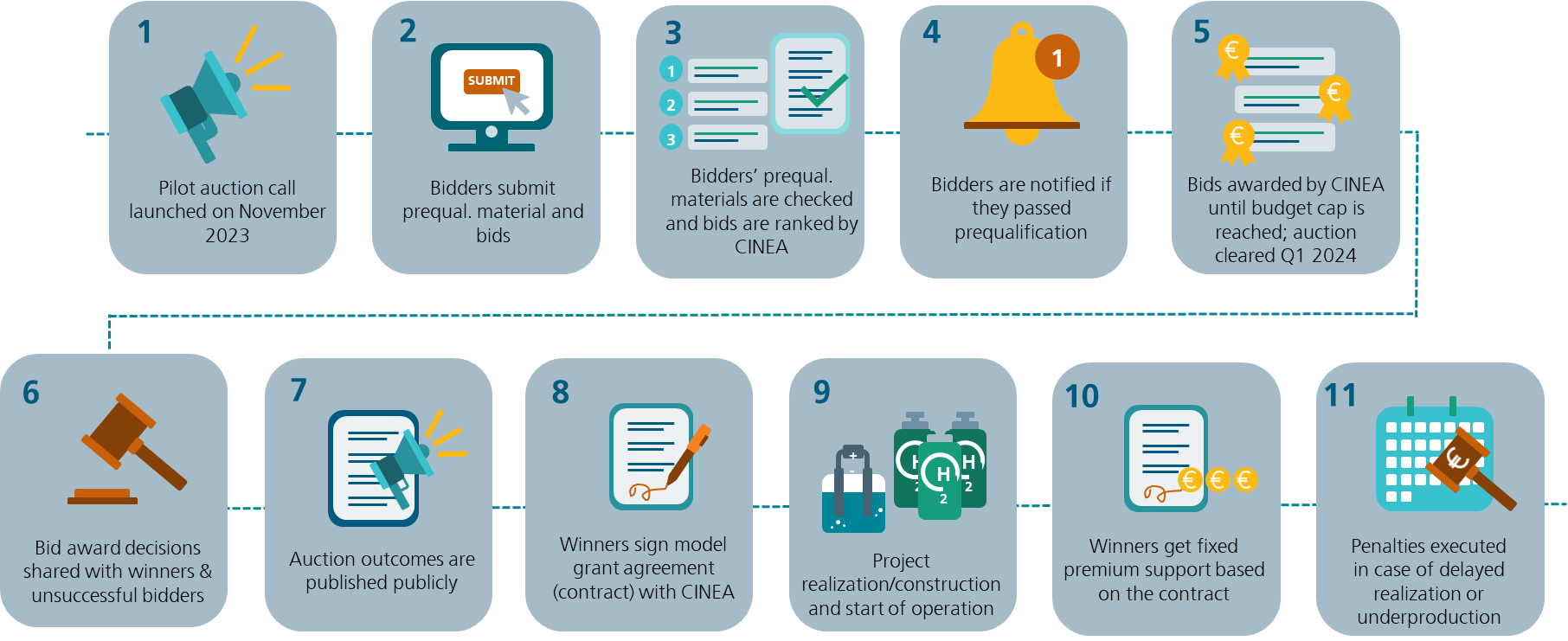
We published the pilot auction’s Terms and Conditions (T&C) on 30 August 2023. We split them into four chapters:
- Background and auction objectives
- Overview of auction design elements
- Qualification requirements
- Rules for cumulation of support with other public support
Some key aspects of the design entail the following:
- Admissibility, eligibility and quality criteria. To qualify for the auction’s price ranking stage, applicants must submit documents articulating the project relevance and aspects such as technical, financial and operational capacity (see section 3 of the T&C). This information will be checked and evaluated on a pass/fail basis before ranking the proposals according to their bid price. Applicants must submit the requested application forms, supporting documents and templates before the due date, which will be announced in the call via the Funding & Tenders portal. Some key elements of the auction design are summarised below, but we encourage all prospective bidders to refer to the T&C:
- Bid proposals must relate to projects with a production located in the European Economic Area.
- The auctioned good is RFNBO hydrogen, in line with the definitions and requirements from the Renewable Energy Directive and its Delegated Acts.
- Ceiling price for the bids: 4.5 €/kg of hydrogen produced.
- Maximum budget restriction for each bid: one-third of the total available budget defined for the auctioned topic (i.e. one-third of €800 million or €266,7 million).
- Maximum time to entry into operation: five years after grant agreement signature.
- A completion guarantee is required to enter the auction and avoid speculative bidding.
- Price ranking. Qualifying proposals will be ranked from lowest to highest bid price and awarded in that order until the available budget (€800 million) is exhausted.
- Payments. Made only upon verified and certified RFNBO hydrogen production and are scheduled semi-annually upon entry into operation. Production flexibility rules are in place, catering for the intermittent nature of renewable power supply.
The Commission is offering the Innovation Fund auction design as a platform for countries of the European Economic Area (EEA) to use to allocate additional national Funds. For more information on this, please refer to the section below on Auctions as a Service. Germany has contributed to the pilot auction with an Auctions-as-a-Service window of €350 million.
- Read our Frequently asked questions (FAQ)
- Watch our webinar
- Completion guarantee letter of intent
- Completion guarantee
For questions on the Innovation Fund pilot auction, please get in touch with CLIMA-AUCTIONS ec [dot] europa [dot] eu (clima-auctions[at]ec[dot]europa[dot]eu)
A thorough lessons learned process from the pilot auction is planned for spring 2024. Stakeholders will have the opportunity to comment on the draft terms and conditions for the second auction round during a 6-week written consultation process, as well as during a stakeholder event planned for spring/summer 2024.
Documentation from previous stakeholder consultations and support contract:
- 16/05/2023 - Follow-up stakeholder workshop on the draft economic T&C for the 2023 Innovation Fund pilot auction
- Slides, including summary of survey preceding the stakeholder workshop
- 21/11/2022 - Stakeholder workshop on designing a competitive bidding tool to fund hydrogen innovation
- 28/10/2022 - Workshop with academia, think-tanks and Member States
- Support Contract - Assistance in the Analysis and Set-up of a Competitive Bidding Mechanism for Contracts for Difference, Carbon Contracts for Difference or Other Comparable Schemes under the Innovation Fund
Auctions as a Service (AaaS)
To avoid fragmentation at the early stage of hydrogen market formation in Europe and to save administrative costs of developing different hydrogen support schemes by the EEA, the Commission extends the Innovation Fund pilot auctions as a platform to interested countries of the EEA. This mechanism, called Auctions-as-a-Service (AaaS), enables countries of the EEA to use their national budget resources to award support to projects located on their territory while relying on the EU-wide auction mechanism to identify the most competitive projects.
To participate in AaaS, interested countries must have a national budget allocated and follow the State aid notification process before the opening of the Innovation Fund auction. The Commission will assist countries with pre-filled notification templates reflecting the auction T&C.
In practice, the concept of AaaS consists of:
- EEA countries using the State Aid compliant, EU-wide Innovation Fund pilot auction as an auction mechanism.
- the Commission facilitating the notification of national schemes.
- CINEA informing countries about the results of the pilot auction with a ranking of potential vetted and cost-competitive projects to be implemented in participating countries (upon agreement of the projects).
- the Commission providing guidance for minimum requirements for contracts to be signed at the national level between project developers and national authorities.
The AaaS will work accordingly:
- EEA countries commit national budget to the AaaS and communicate their intention to participate to the Commission.
- CINEA opens the auction.
- Projects across EEA submit bids, which will be assessed, ranked, and cleared in line with the auction T&C.
- The lowest bids are cleared under the auction budget until it is exhausted, following the ranking of projects.
- The ranking of the remaining unawarded projects is cleared under the national budget(s) and information about the successful bids is passed to the respective country.
- An additional ceiling price applies to projects supported under AaaS to ensure competition in the presence of additional national funds. This additional, country-specific ceiling price will be calculated as follows:
- [The price of the last project cleared under the Innovation Fund budget, that is not from the same country] * [a factor X]. The formula will be established at the EU level.
- CINEA is responsible for awarding, contracting, and monitoring support for projects under the Innovation Fund budget.
- Participating countries are responsible for awarding, contracting, and monitoring project support under national budgets.
The European Hydrogen Bank Communication, published in March of 2023, first detailed the AaaS concept. For more information, you can review our AaaS concept note.
For questions on the AaaS, please email CLIMA-AUCTIONSec [dot] europa [dot] eu (clima-auctions[at]ec[dot]europa[dot]eu)
If a country wants to allocate support to hydrogen production using the AaaS system, it should consider the following steps:
- The participating country must have a support scheme in place or adopt a new one for the AaaS.
- Any support scheme must be cleared through the State Aid procedure with the Commission and shall comply with the CEEAG unless it falls within the General Block Exemption Regulation (GBER) thresholds.
- The participating country must ensure certain elements are present in their support schemes (e.g. provisions on monitoring, transparency, reporting and payment arrangements, an indication of the budget that intend to allocate for the national compartment of the auction). Once this is ensured, they send the complete notification of national schemes for using the AaaS. Countries with a serious interest in participating in the pilot auction and with available budget must inform the Commission as soon as possible. Upon reviewing the notification, the Commission’s Directorate-General for Competition will issue a decision on the national schemes before opening the pilot auction.
When bidders apply to the auction, they can indicate their interest in being considered for AaaS. Projects can only be considered for AaaS if they are in a country that has decided to offer a national scheme through AaaS. Projects will first be considered under the Innovation Fund budget. If not awarded within this budget, they will be considered for AaaS. Applicants will be given the following choice: the project can remain on the Innovation Fund reserve list or be passed on to national funding.
Countries that signed up for the AaaS will receive the ranked list of projects in their territory. Countries must follow the ranking of projects as issued by the Innovation Fund and cannot add additional award criteria.
Projects awarded through AaaS will sign corresponding national grant agreements and documentation with the respective awarding country.